
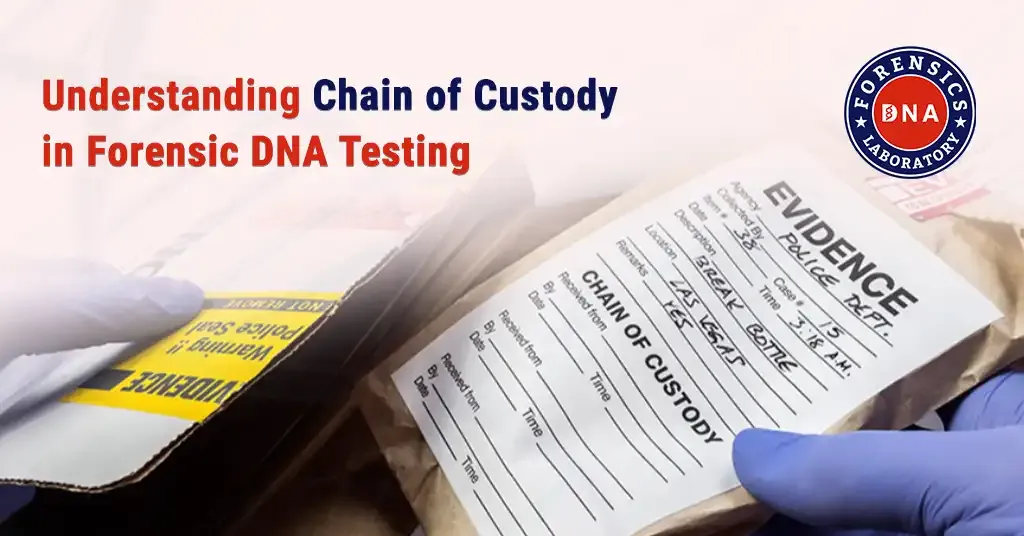
When you decide to take a DNA test, you are looking for answers that can change your life. Because these results are so important, the lab must follow a very strict set of rules to make sure your sample is never mixed up or tampered with.
This process is known as the chain of custody in forensic DNA, and it begins when an honorable hearing judge orders a DNA test of the individuals. This procedure involves strict protocols so the DNA test report is admissible in legal disputes. Moreover, it also gives you the peace of mind that the report you receive is absolutely yours and can be trusted by doctors, lawyers, or government officials.
The Chain of Custody Meaning
A chain of custody means the DNA sample collection procedure is monitored under the supervision of an official. In simple terms, it’s an extra cautious procedure that ensures the integrity of a DNA test report.
For instance, you opted for an official DNA test for a court-related case. So a DNA test is performed under a strict chain of custody procedure to make sure the DNA test report is admissible in court as legal evidence.
Moreover, even embassies, in special cases, demand a DNA test under a strict chain of custody procedure. It’s to ensure the sponsor and applicant are true.
Professional Forensic Evidence Handling
When your sample is collected, they are handled with extra care to prevent tampering and contamination. This is called forensic evidence handling. It involves several steps to keep the safety and ensure the credibility of the DNA samples:
- Identification: You must show a government photo ID. The professional taking your sample will also take your thumbprint and a photo of you holding your ID.
- Tamper-Proof Seals: Once your cheek swab is placed in an envelope, a special seal is put over the flap. If anyone tries to peel it off, the paper will rip or show a “void” message.
- Unique Barcoding: A unique barcode is placed on every tube and form. This prevents mix-ups if two samples have the same names.
By following the strict protocols, the lab experts ensure that no outside material, such as dust or hair, gets into your DNA sample. This careful handling is why these tests are admissible in courts and by international embassies.
The Step-by-Step DNA Sample Handling Process
Once your sample leaves your sight, it goes through a very organized DNA sample handling process. It doesn’t just sit in a mailbox; it moves through a high-security system.
- Secure Transport: The sealed kit is picked up by a professional courier. They sign for the package, acknowledging they are now responsible for it.
- Lab Intake: When the package arrives at the lab, an intake officer checks the seals. If a seal looks broken, the lab will reject the sample and ask for a new one to ensure integrity.
- Controlled Access: Only authorized workers with special key cards can enter the rooms where samples are kept. This keeps your private information safe from people who don’t belong there.
- Careful Analysis: When it is time to look at the DNA, the expert works in a clean room. They log the start and end time of their work into a computer system that cannot be changed later.
This process ensures that your sample is kept at the right temperature and away from sunlight or moisture that could ruin it. Every person in this chain knows that their signature is a promise that they followed the rules.
Why Do Embassies Demand A DNA Test Under a Strict Chain of Custody Procedure?
When embassies suspect a visa application document, they usually demand a DNA test report to further validate the sponsor-applicant’s genetic link.
But in some special cases, they can demand a DNA test under a strict chain of custody procedure for extra precautions. In the embassy’s chain of custody procedure, an official from the immigration department monitors the sample collection procedure.
First, the official verifies the identities of the sponsor and applicant using their government ID and passport to ensure the right parties are present. Then, the collected DNA samples are securely sealed to prevent any tampering. Later, the samples are securely transported to a lab for further analysis.
Why Choose DNA Forensics Laboratory for Legal DNA Tests in India?
DNA Forensics Laboratory, also called DFL, is one of the most trustworthy labs in India for legal DNA tests. It’s because DFL is the only private DNA testing company in India whose DNA test reports are legally admissible in the honorable courts of law.
During your court hearing, the honorable hearing judge will order a DNA test in the state laboratory. During that time, you can request a DNA test in a private lab like DNA Forensics Laboratory. It’s because DFL holds accreditation from NABL and certification from ISO, which demonstrates our high standards for DNA testing procedures.
We have 400+ sample collection centers across the globe, making our facilities easily reachable near your location. Besides, our lab experts are rigorously trained in DNA testing services. They utilize advanced equipment with their years of experience for precise DNA testing procedures, which generate accurate results.
For more information or to book a legal DNA test in India, call us at +91 8010177771. Alternatively, you can also send a message on WhatsApp at +91 9266615552.
Frequently Asked Questions
Q1. Can I collect my own samples at home for a legal DNA test?
Ans: No. A home-collected DNA sample isn’t admissible in the courts for legal disputes. In order for the report to be admissible in courts, the DNA testing process has to go through the chain of custody procedure.
Q2. What happens if the seal on my sample is broken?
Ans: If the seal of the sample package is broken, it’s likely that the sample has either been tampered with or contaminated. As a result, they’ll reject it immediately and request another DNA test sample.
Q3. Why do I need to show my identity in a legal DNA test?
Ans: It’s a mandatory protocol in a chain of custody procedure to ensure the right individual is present in the DNA test, which enhances the legitimacy of the DNA test.
Q4. Where can I get a legal DNA test done in India?
Ans: DNA Forensics Laboratory provides accurate, reliable, and court-admissible DNA tests in India. You can schedule an appointment with our lab experts for your legal DNA test.
Q5. What documents are required for a legal DNA test in India?
Ans: A government-issued ID, recent passport-sized photographs, a consent form, and a court order are required for a legal DNA test in India.
Q6. How much does a legal DNA test cost in India?
Ans: The cost of a legal DNA test in India is around 35,400 INR. However, it may vary depending on factors like the number of people in the test and the complexity of the test.

